



About us
Aggregate Industries is one of the leading building materials suppliers. Our aim is to be the UK leader in innovative and sustainable building solutions. We are committed to grounding sustainability in the future of the construction industry.
Building Progress for a Sustainable Future
We are transforming our business and driving our growth through sustainable thinking. We are dedicated to decarbonising our own operations and driving decarbonisation across the sector, as well as playing a significant role in enabling the UK to transition to net zero.
Our Capabilities
With over 200 sites and around 3,700 dedicated employees, we offer a full range of construction products to help our partners work sustainably, safely, professionally and profitably.
Home to everything from aggregates, asphalt, ready-mixed concrete, cement and precast concrete products, we also produce, import and supply construction materials, export aggregates and carry out national road surfacing and contracting solutions.
We’re a proud member of Holcim, which is the leading global building materials and solutions company with around 70,000 employees in over 80 countries. It holds leading positions in all regions with a balanced portfolio of developing and mature markets.
Our People
Our people are at the very heart of our business. It’s in how our people build strong partnerships through a shared commitment to sustainability that drives business growth.
Our teams can be counted on to add value, make a difference and truly care about what they do. By being supportive and open, we work together, striving for mutual success – and we encourage all our people to be curious and develop their skills.


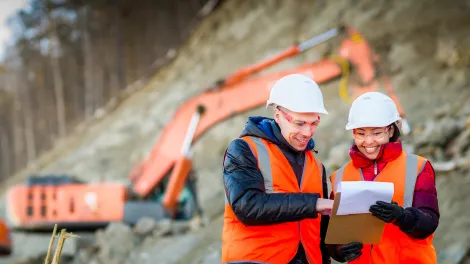
We’re proud to have been certified with The Responsible Source™, thanks to our never-ending innovation and investment. We offer a varied portfolio of sustainable solutions that complement our typically traditional products. For more than a decade, we’ve been a supplier and manufacturer of concrete and aggregate products for all core markets.
We’ve been addressing a variety of issues, such as health and safety, quality control, ethical trading, carbon and water management, biodiversity, and social responsibility, so that we can offer our customers only the very best sustainable solutions.
Following on from our work, we’ve become the first company in the world to be certified to BES 6001 standards. This is the framework for responsible sourcing of construction materials, awarded by the Building Research Establishment (BRE).
Going hand in hand with offering our customers the very best, we’re committed to providing high quality products and services, which we do by implementing an effective Quality Management System (QMS). We know that mitigating and managing our impacts is important, so we ensure that our environmental performance continually improves by introducing an effective Environmental Management System (EMS) that’s relevant to our activities. We’re certified to ISO:9001 and ISO:14001.